


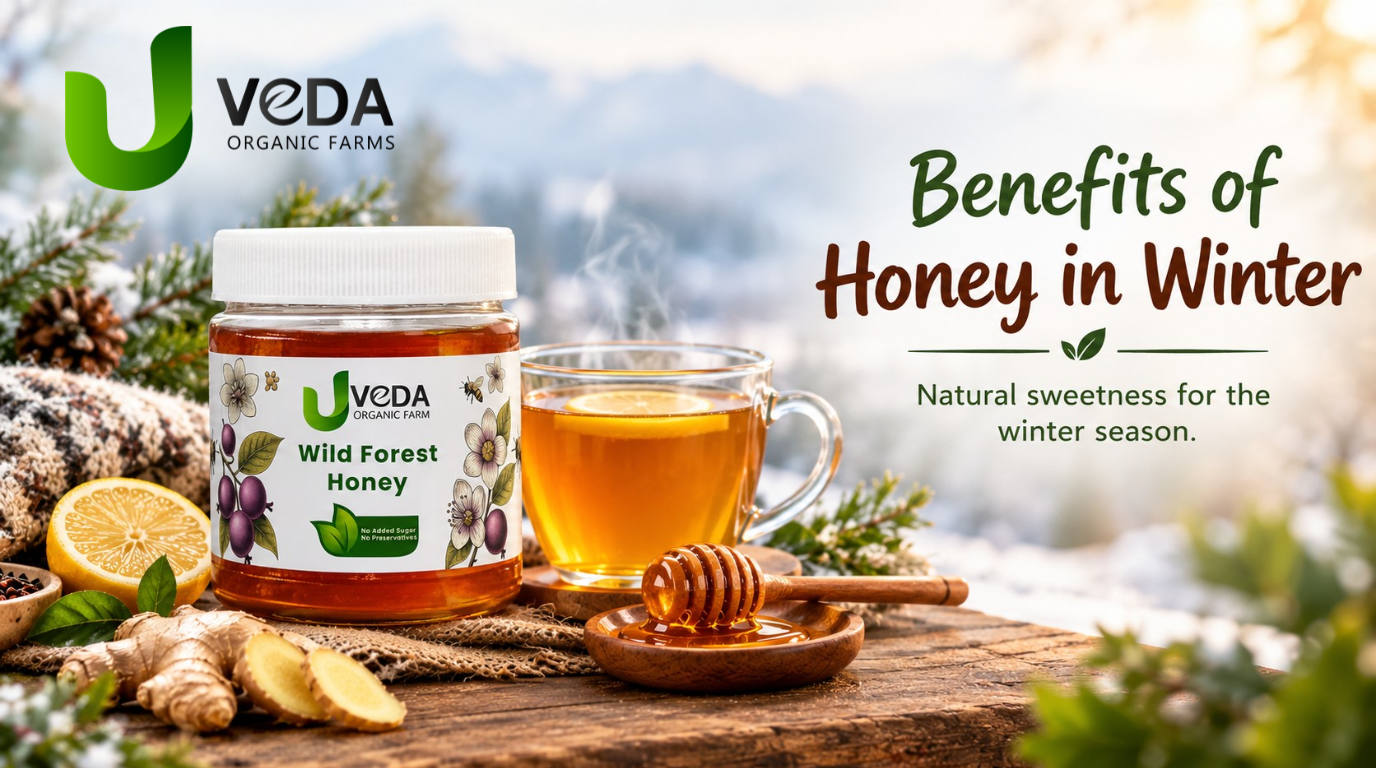
Winter brings cooler mornings, dry air, warm blankets, and a greater craving for comforting foods and drinks. During this season, many people add honey to their daily routine because it is naturally sweet, easy to use, and pairs well with warm beverages.
But what are the actual benefits of honey in winter, and how can you include it in your everyday diet?
Honey is more than just a natural sweetener. It contains naturally occurring compounds, including antioxidants, and research has explored its potential role in soothing cough symptoms and supporting overall dietary quality. However, honey is still primarily a source of sugar, so it is best enjoyed in moderation.
In this guide, let’s explore the benefits of eating honey in winter, simple ways to enjoy it, and why choosing good-quality honey matters.
Why Do People Eat Honey in Winter?
Cold weather often changes our food habits. We naturally look for warm drinks, comforting breakfasts, and foods that feel soothing.
Honey fits easily into a winter routine. You can add it to warm water, herbal tea, milk, oatmeal, toast, smoothies, or homemade recipes. Its naturally sweet taste can also help you reduce your dependence on highly processed sweeteners in some meals.
One of the most commonly discussed benefits of honey in winter season is its ability to soothe the throat when consumed with a warm drink. Research has found that honey may help reduce cough symptoms, particularly in children over one year of age, although the quality and scope of the evidence vary.
1. Honey May Help Soothe a Dry or Irritated Throat
A dry throat can be uncomfortable during colder months. Warm water or tea with honey is a traditional combination used to provide a soothing sensation.
Honey has a thick texture, and when consumed, it can coat the throat temporarily. This may help make a dry or irritated throat feel more comfortable.
Research also suggests that honey can help reduce cough symptoms in children over one year old. A recent systematic review found potential benefits for acute cough, although researchers noted limitations in the available evidence.
This does not mean honey cures a cold or infection. Rather, it can be a simple food that may provide temporary comfort when included as part of a normal winter routine.
2. Honey Contains Antioxidant Compounds
Another important point among the benefits of honey in winter is its naturally occurring antioxidant compounds.
Honey can contain phenolic compounds and flavonoids, although the exact composition varies depending on the floral source, geographical origin, processing, and other factors. These compounds contribute to honey’s antioxidant activity.
Antioxidants are compounds that help protect cells from oxidative stress. Including a variety of antioxidant-containing foods in your overall diet is part of a balanced approach to nutrition.
This is one reason people often prefer natural honey as part of their everyday food choices rather than using it only occasionally.
3. A Simple Source of Carbohydrates and Energy
Honey mainly contains carbohydrates, including naturally occurring sugars such as glucose and fructose. This makes it an easy source of energy.
During winter, you can use a small amount of honey in breakfast or beverages when you want a naturally sweet source of carbohydrates.
For example, try adding a spoonful to:
- Warm water
- Oatmeal
- Whole-grain toast
- Homemade granola
- Smoothies
- Herbal tea
- Yogurt
Because honey is still a sugar-rich food, more is not necessarily better. A moderate amount is generally the sensible approach.
4. Honey Goes Well With Warm Winter Drinks
One of the easiest benefits of eating honey in winter is simply how convenient it is to include in your daily meals and drinks.
A warm cup of tea with honey can be comforting on a cold morning or evening. You can also combine honey with ingredients such as lemon, ginger, or cinnamon to create flavorful homemade drinks.
For example:
Warm Honey Ginger Drink
Mix warm water with a small amount of honey and freshly prepared ginger. Allow the drink to cool slightly before adding honey rather than mixing it into boiling-hot water.
The result is a simple winter beverage that is pleasant, warming, and easy to prepare.
5. Honey Can Make Healthy Foods More Enjoyable
Healthy eating does not have to be boring. A little honey can add natural sweetness to foods that you already enjoy.
Try drizzling honey over oatmeal with nuts and fruit, adding it to plain yogurt, or using it in homemade energy bites.
This can be particularly useful during winter when people may prefer heavier, sweeter foods.
Instead of adding large amounts of refined sugar to a recipe, using a smaller quantity of good-quality honey can provide sweetness along with honey’s naturally occurring compounds.
However, honey should still be counted as a source of added/free sugars in your overall diet.
6. Different Honey Varieties Offer Different Flavours
Honey isn’t one single type of food. Its flavour, aroma, colour, and composition can vary depending on the flowers from which bees collect nectar.
This is why different varieties can have completely different tastes.
For example, Uveda Organic Farm offers varieties such as Multiflora Honey, Wild Forest Honey, Ajwain Honey, Neem Honey, Litchi Honey, Jamun Honey, Sidr Honey, and Kashmiri Acacia Honey.
Multiflora Honey, for example, comes from nectar collected from different flowers and can have a naturally varied floral character. Wild Forest Honey offers a deeper, more distinctive flavour profile associated with diverse forest flora.
When choosing honey, look at the product information, source, ingredients, and processing details rather than choosing only based on colour or sweetness.
7. Honey May Be Useful for Winter Cough Comfort
Among the commonly discussed benefits of honey in winter season, cough relief is one of the areas with research behind it.
Studies have found that honey may help reduce cough frequency and improve some cough-related symptoms in children older than one year. However, evidence is not strong enough to describe honey as a treatment for every type of cough or respiratory illness.
For adults, honey may also provide a soothing effect when added to warm tea or water, but persistent, severe, or unusual symptoms should be discussed with a healthcare professional.
Most importantly, never give honey to babies under 12 months of age because of the risk of infant botulism.
How to Include Honey in Your Winter Diet
You don’t need complicated recipes to enjoy honey. Here are some simple ideas:
Morning Honey Water
Add a small amount of honey to warm water and drink it as part of your morning routine.
Honey and Herbal Tea
Add honey to warm herbal tea for natural sweetness and a soothing drink.
Honey Oatmeal
Top oatmeal with a small drizzle of honey, fruit, and nuts.
Honey Yogurt Bowl
Combine plain yogurt, fruit, nuts, and a little honey for an easy breakfast or snack.
Honey on Toast
Spread nut butter on whole-grain toast and add a light drizzle of honey.
Remember that honey is still a concentrated source of sugar, so moderation matters.
How to Choose Good-Quality Honey
Not all honey products are identical. When buying honey, check the label carefully.
Look for:
- Clear ingredient information
- Reliable sourcing
- Appropriate food-safety and quality information
- No unnecessary added ingredients
- A brand that clearly communicates its product details
For people looking for naturally sourced honey, Uveda Organic Farm focuses on a range of honey varieties designed for everyday use.
Whether you choose Multiflora, Wild Forest, Ajwain, Litchi, Jamun, Neem, Sidr, or Kashmiri Acacia Honey, select a variety based on your taste preferences and how you plan to use it.
Final Thoughts on the Benefits of Honey in Winter
The benefits of honey in winter are mainly connected with its versatility as a natural sweetener, its naturally occurring antioxidant compounds, and its potential to soothe cough and throat discomfort.
The benefits of eating honey in winter can be enjoyed in simple ways—from adding it to warm tea and water to using it in oatmeal, yogurt, toast, and homemade recipes.
At the same time, honey is not a miracle food or a replacement for medical treatment. It is primarily a sugar-rich food, so moderation is important. And remember: honey should never be given to children younger than one year.
If you want to make honey part of your winter routine, choose a variety you enjoy and use it thoughtfully as part of a balanced diet.
With quality honey from a trusted source such as Uveda Organic Farm, a simple spoonful can add natural sweetness and flavour to many of your favourite winter foods and drinks.