


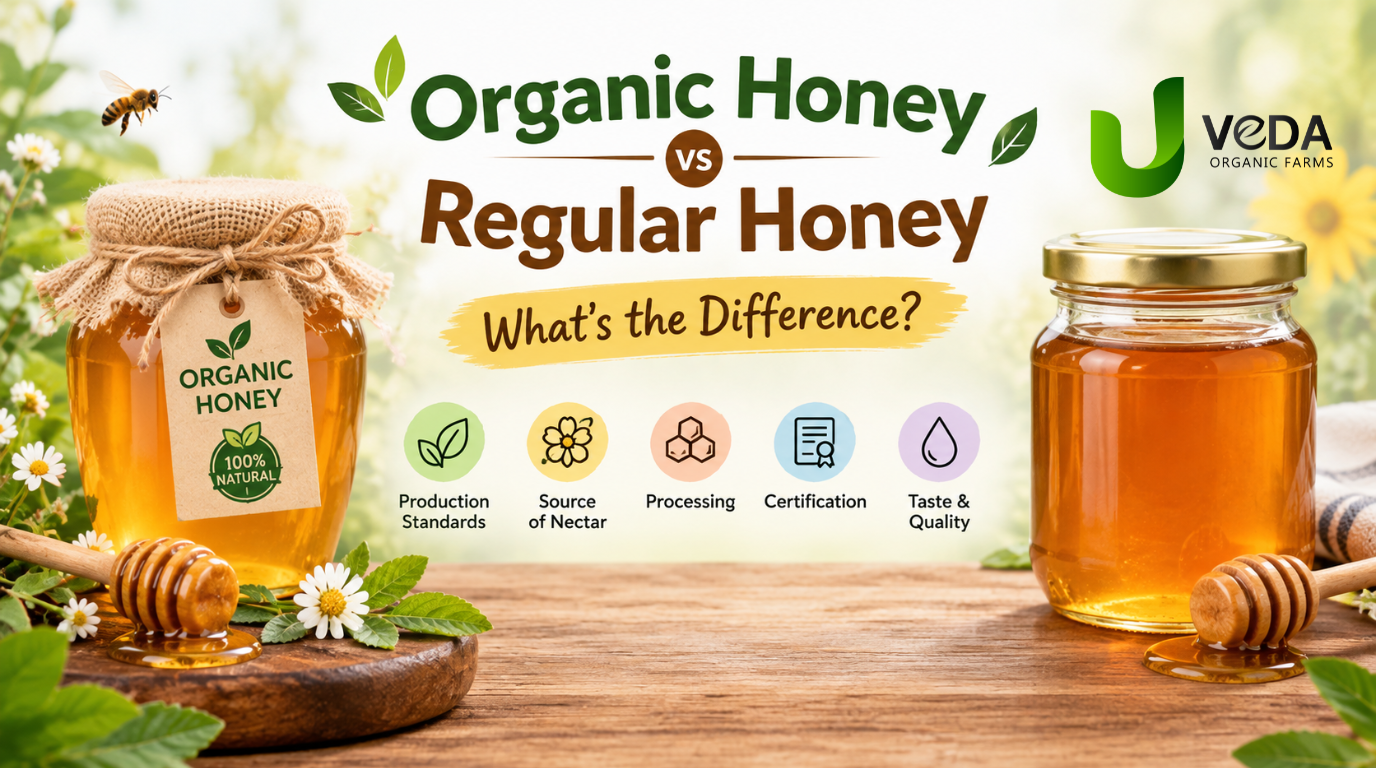
Honey has been used for generations as a natural sweetener and traditional food. Today, when you walk into a store or shop online, you may see many different types of honey, including raw honey, pure honey, natural honey, and organic honey. This can make one simple question a little confusing: what is the difference between organic honey and regular honey?
At first glance, both may look and taste similar. However, the way the bees are managed, where the nectar comes from, how the honey is processed, and how its quality is verified can make a difference.
In this guide, we will explain organic honey vs regular honey in simple terms so you can make a more informed choice when buying honey.
What Is Organic Honey?
Organic honey generally comes from beekeeping practices that follow specific organic production standards. These standards can vary depending on the country and certification system, but they generally focus on the environment around the bees, the management of the hives, and restrictions on certain agricultural chemicals and substances.
For organic honey production, beekeepers need to follow the applicable organic certification requirements. The location of the hives can also be important because bees naturally travel to flowers over a wide area.
This is why certified organic honey is different from simply calling a honey product “natural” or “pure.” The word organic relates to production standards and certification, not just the appearance or taste of the honey.
Organic honey may come from flowers in forests, farms, orchards, or other suitable areas depending on the source and certification requirements.
What Is Regular Honey?
Regular honey is simply honey that is not necessarily produced under an organic certification system.
This does not automatically mean that regular honey is poor quality. There are many good-quality honey products available that are not certified organic.
Regular honey can come from different floral sources, such as mustard, eucalyptus, acacia, wildflowers, litchi, neem, ajwain, or forest flowers. Its colour, flavour, aroma, and texture can vary depending on the flowers visited by the bees.
The main difference is usually the production and certification standard, rather than the fact that one is honey and the other is not.
Organic Honey vs Regular Honey: Key Differences
When comparing organic honey and regular honey, it helps to look at several factors instead of focusing on the label alone.
1. Production Standards
Organic honey is produced according to organic standards applicable to the region and certification body.
Regular honey may be produced using conventional beekeeping practices and does not necessarily follow organic certification requirements.
If organic certification is important to you, check the product label and certification details rather than relying only on words such as “natural” or “pure.”
2. Source of Nectar
The nectar collected by bees is one of the main factors that determines the character of honey.
For organic honey, the surrounding environment and approved production practices are important parts of organic requirements.
Regular honey can also come from excellent floral sources, but the surrounding agricultural and beekeeping practices may follow conventional standards.
This is one reason you may notice differences in the colour, aroma, sweetness, and flavour of different honey varieties.
3. Processing
Honey can be filtered, heated, blended, or processed in different ways depending on the producer.
Some honey products are minimally processed and may retain more of the natural characteristics associated with honey. Raw honey is generally used to describe honey that has undergone little processing, although the exact meaning of “raw” can vary between sellers and markets.
It is important to remember that organic does not automatically mean raw. A honey can be organic without being marketed as raw, and raw honey is not automatically certified organic.
4. Certification
This is one of the biggest differences to understand.
A certified organic honey product should have the appropriate certification or labeling required by the relevant authority.
On the other hand, a honey labeled “pure honey,” “natural honey,” or “raw honey” may not have organic certification.
So, if you are specifically looking for organic honey, look for genuine certification information on the packaging.
5. Taste and Colour
There is no single taste or colour that defines organic honey.
Honey can range from very light golden to dark amber depending on its floral source. Its flavour may be mild, fruity, floral, earthy, or strong.
For example, multiflora honey can have a more complex flavour because bees collect nectar from different flowers. Forest honey may have a deeper and stronger taste, while acacia honey is often known for its lighter colour and mild flavour.
Therefore, taste alone cannot tell you whether honey is organic.
Is Organic Honey Healthier Than Regular Honey?
This is one of the most common questions about organic honey vs regular honey.
Both organic and regular honey are naturally sweet foods and contain sugars. Honey may also contain small amounts of naturally occurring compounds such as enzymes, minerals, and antioxidant compounds, depending on the honey and how it is processed.
However, organic certification itself should not be interpreted as a guarantee that organic honey contains dramatically more nutrients than every regular honey.
The overall quality of honey depends on factors such as its floral source, handling, processing, storage, and authenticity.
If your priority is choosing honey with fewer concerns about certain conventional agricultural practices, certified organic honey may be appealing. If your priority is flavour, floral variety, or sourcing, a high-quality regular honey may also be a good choice.
Organic Honey vs Pure Honey: Are They the Same?
No. These terms describe different things.
Pure honey generally refers to honey without added ingredients, but the exact labeling rules depend on the market and product.
Organic honey refers to honey produced according to applicable organic standards and certification requirements.
A product can be pure honey without being organic.
Similarly, a certified organic honey product can also be pure honey.
This is why checking the complete product label is more useful than choosing a product based on one word.
Organic Honey vs Raw Honey
Another common comparison is organic honey vs raw honey.
Organic describes the production system and certification, while raw generally describes the level of processing.
For example:
- Organic honey = produced according to applicable organic standards.
- Raw honey = generally minimally processed, depending on the producer’s definition.
- Pure honey = refers to honey without added ingredients, subject to applicable labeling standards.
- Natural honey = commonly used as a marketing or product description, but it is not the same as organic certification.
These terms should not be treated as interchangeable.
What Are the Benefits of Choosing Organic Honey?
Choosing organic honey can be useful for people who specifically prefer products made under certified organic production standards.
Some potential reasons people choose it include:
- Preference for certified organic farming and beekeeping practices
- Greater interest in traceable production
- Preference for products with specific organic certification
- Avoiding certain conventional agricultural inputs where organic standards restrict them
- Supporting environmentally focused production practices
However, always check the certification information before purchasing.
How to Choose Good Quality Honey
Whether you choose organic or regular honey, there are a few things worth checking before buying.
Check the Label
Look for the product name, ingredients, net quantity, source information, manufacturer or packer details, batch information, and applicable certifications.
If a product claims to be organic, check the certification details.
Look at the Ingredients
Good honey should not need unnecessary added ingredients.
If you want pure honey, check whether the ingredient list simply identifies honey, as applicable to the product and local labeling requirements.
Consider the Floral Source
The floral source can tell you a lot about the expected taste and aroma.
You may find varieties such as:
- Multiflora honey
- Wild forest honey
- Acacia honey
- Litchi honey
- Neem honey
- Jamun honey
- Ajwain honey
- Mustard honey
Each variety can have a different flavour profile.
Don’t Judge Honey Only by Colour
Dark honey is not automatically better, and light honey is not automatically more pure.
Colour naturally varies according to the floral source and other factors.
Buy From a Trustworthy Seller
Choose brands that provide clear product information and follow applicable food safety and labeling requirements.
For packaged honey in India, consumers should also look for relevant regulatory and certification information on the product label.
Which Is Better: Organic Honey or Regular Honey?
There is no single answer for everyone.
If your main priority is certified organic production, organic honey may be the better fit for your preferences.
If your priority is finding a particular flavour, floral source, or a good-quality honey at a suitable price, regular honey can also be worth considering.
The most important thing is to look beyond the marketing terms. Check the source, ingredients, processing information, certification, packaging, and reputation of the seller.
Final Thoughts
The difference between organic honey vs regular honey mainly comes down to how the honey is produced and whether it meets recognized organic certification standards.
Organic honey is not simply “better honey” because it has the word organic on the label. Likewise, regular honey is not necessarily low quality just because it is not organic.
For the best choice, consider what matters most to you—organic certification, floral source, minimal processing, taste, traceability, or price.
Whether you choose organic honey, raw honey, pure honey, or natural honey, buying from a reliable source and checking the product label can help you make a better-informed decision.
Frequently Asked Questions
Is organic honey better than regular honey?
Organic honey may be preferable if you specifically want honey produced under certified organic standards. However, regular honey can also be high quality.
Is organic honey the same as raw honey?
No. Organic refers to production standards and certification, while raw generally refers to the level of processing.
Is all organic honey raw?
No. Organic certification does not automatically mean that honey is raw or minimally processed.
How can I identify certified organic honey?
Check the product packaging for the applicable organic certification and regulatory information. Do not rely only on words such as “natural” or “pure.”
Can regular honey be pure honey?
Yes. Honey does not have to be certified organic to be pure. Check the ingredients and product labeling to understand what you are buying.
Does honey naturally crystallize?
Yes. Crystallization is a natural process that can occur in honey. The speed and texture of crystallization can vary depending on the floral source and storage conditions.