


Honey has been enjoyed for generations as a natural sweetener and a simple addition to everyday meals. Among the many varieties available today, multiflora honey is especially popular because it comes from the nectar of different flowers rather than a single plant.
This variety has a naturally rich taste and contains naturally occurring compounds that make it an interesting choice for people looking for a natural alternative to refined sugar.
But what are the actual multiflora honey benefits, and how can you include it in your daily routine? Let’s explore its potential benefits, nutrition, uses, and some common questions about this natural food.
What Is Multiflora Honey?
Multiflora honey is produced by honeybees that collect nectar from several different flowering plants. Since the floral sources can vary depending on the season and location, its color, aroma, flavor, and texture may differ from one batch to another.
Unlike single-flower honey, such as acacia or mustard honey, multiflora honey does not come primarily from one specific plant.
Natural multiflora honey can have a floral, mildly sweet, or slightly earthy flavor. It can be enjoyed on its own or used as a sweetener in drinks, breakfast foods, and homemade recipes.
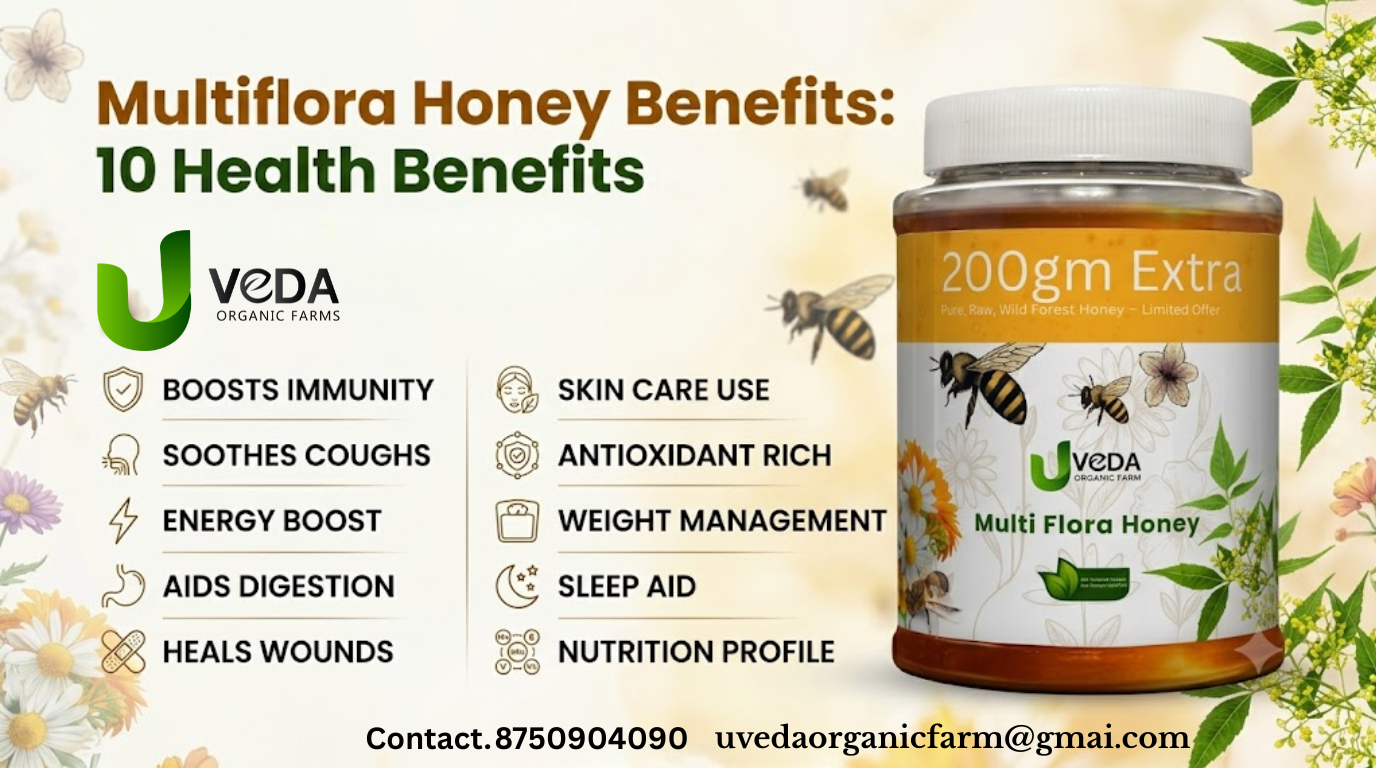
10 Multiflora Honey Benefits
The nutritional composition of honey can vary depending on its floral sources and processing. Here are 10 potential benefits of including honey as part of a balanced diet.
1. Provides a Quick Source of Energy
Honey contains naturally occurring sugars, mainly glucose and fructose. These carbohydrates can provide the body with a readily available source of energy.
A small amount of honey in the morning, before physical activity, or added to a snack can be a convenient way to add natural carbohydrates to your diet.
2. Contains Naturally Occurring Antioxidant Compounds
One of the notable benefits of multiflora honey is that honey can contain antioxidant compounds, including phenolic compounds and flavonoids.
Antioxidants help protect cells from oxidative stress. The amount and type of these compounds can differ considerably depending on the flowers from which the bees collected nectar.
3. May Support Normal Immune Function
Honey is often included in traditional diets during seasonal changes. Its naturally occurring plant compounds may contribute to its overall nutritional value.
However, honey should not be considered a medicine or a replacement for a balanced diet and healthy lifestyle.
4. Can Be Soothing for the Throat
Honey has traditionally been used as a soothing food for an irritated or dry throat. Its smooth texture can provide temporary comfort when mixed into warm water or tea.
For adults and children over one year of age, honey can be a simple ingredient to include in a warm drink when experiencing occasional throat discomfort.
Important: Honey should never be given to babies under 12 months because of the risk of infant botulism.
5. Supports a Balanced Diet as a Natural Sweetener
Replacing some refined sugar with honey can be one practical way to add sweetness to foods and beverages.
You can use a small amount of pure multiflora honey in oatmeal, yogurt, smoothies, or homemade salad dressings.
Honey is still a source of added sugar, so moderation is important.
6. May Complement Digestive Wellness
Honey has traditionally been used in various food cultures as part of everyday diets. Its natural sugars and plant compounds make it a versatile food.
Adding a moderate amount to your diet may be a pleasant way to replace some highly refined sweeteners while maintaining variety in your meals.
7. Contains Small Amounts of Micronutrients
Honey is primarily made up of carbohydrates and water, but it can also contain small amounts of minerals, vitamins, enzymes, and other naturally occurring compounds.
The exact nutritional profile depends on the floral source, geographical region, harvesting conditions, and processing method.
8. Can Be Useful Before or After Physical Activity
Because honey contains carbohydrates, it can be used as part of a snack around exercise.
For example, you could add a teaspoon of honey to yogurt, whole-grain toast, or a homemade smoothie. Combining honey with protein, fiber, or healthy fats can make a more balanced snack.
9. Naturally Adds Flavor to Foods
Another advantage of multiflora honey is its distinctive flavor. Since nectar comes from different flowers, the taste can be more complex than ordinary refined sugar.
This makes raw multiflora honey benefits not only about nutrition but also about enjoying a naturally flavored food.
Try it with:
- Oatmeal
- Yogurt
- Whole-grain toast
- Fresh fruit
- Herbal tea
- Homemade dressings
10. Offers an Alternative to Refined Sweeteners
For people who enjoy the taste of honey, multiflora honey can be a useful alternative to table sugar in many everyday recipes.
Organic multiflora honey, when properly sourced and certified, may also appeal to consumers who prefer organically produced foods.
Remember that organic certification relates to production standards; it does not automatically mean that honey contains fewer calories or sugars.
Multiflora Honey Nutrition
Honey is mainly composed of natural sugars and water. A typical tablespoon of honey contains roughly 60 calories and around 17 grams of carbohydrates, although the exact values can vary between products.
It also contains small quantities of other nutrients and naturally occurring plant compounds.
Because honey is calorie-dense and contains sugars, portion size matters. For most people, enjoying a small amount as part of a varied and balanced diet is a sensible approach.
For accurate nutritional information, always check the nutrition panel on the specific honey product you purchase.
How to Use Multiflora Honey
There are many simple ways to include multiflora honey in your daily meals.
In Warm Water or Tea
Add a small amount to warm water or tea for a naturally sweet drink. Avoid very high temperatures if you want to preserve some of honey’s delicate natural compounds.
With Breakfast
Drizzle honey over oatmeal, yogurt, pancakes, or whole-grain toast. It can add sweetness without needing a large amount.
In Smoothies
A small spoonful can add sweetness to a fruit or yogurt smoothie.
As a Recipe Ingredient
Multiflora honey can be used in homemade dressings, marinades, baked foods, and desserts.
Pure vs Processed Honey: What Should You Know?
When choosing honey, look at the ingredient list and product labeling. Pure multiflora honey should contain honey as the primary and, ideally, only ingredient.
Raw honey generally undergoes less processing than heavily processed honey, although the exact meaning of “raw” can vary by producer and market.
If you prefer organic multiflora honey, look for appropriate organic certification rather than relying only on the word “organic” in marketing.
How Much Multiflora Honey Should You Eat?
There is no single amount that is right for everyone. Honey contains free sugars, so it should be consumed in moderation.
A small teaspoon can be enough to sweeten tea, yogurt, or breakfast foods. Your overall intake should also account for other sources of added or free sugars in your diet.
People with diabetes or specific dietary requirements should discuss appropriate honey intake with their healthcare professional.
Who Should Avoid Honey?
Honey should not be given to infants under 12 months of age because of the risk of infant botulism.
People who are allergic to honey or bee-related products should avoid it and seek appropriate medical advice if they experience an allergic reaction.
Honey is also not a substitute for prescribed medicines or professional medical treatment.
FAQs About Multiflora Honey
1. What are the main multiflora honey benefits?
Multiflora honey provides carbohydrates for energy and contains naturally occurring antioxidant and plant compounds. It can also be used as a natural sweetener and may be soothing for the throat.
2. Is multiflora honey better than regular honey?
There is no single answer. Multiflora honey comes from nectar collected from different flowers, so its flavor and natural compounds can vary. Its benefits depend on the product, floral sources, and processing.
3. Is raw multiflora honey healthy?
Raw multiflora honey can contain naturally occurring enzymes and plant compounds, but it is still primarily a source of sugars. It should be enjoyed in moderation as part of a balanced diet.
4. Can I eat multiflora honey every day?
For most healthy adults, a small amount can be included in a balanced diet. However, honey contains sugar, so portion control is important.
5. Can children eat multiflora honey?
Children over 12 months can generally consume honey. Never give honey to babies under one year of age.
6. Is organic multiflora honey better?
Organic honey is produced according to organic certification standards. Whether it is “better” depends on your personal preferences and priorities. Check for valid certification when buying organic products.
7. Can multiflora honey help with a sore throat?
Honey may provide temporary soothing relief for throat irritation. However, persistent or severe symptoms should be evaluated by a healthcare professional.
8. What is the best way to store multiflora honey?
Keep honey tightly closed in a cool, dry place away from direct sunlight and moisture. Natural crystallization can occur and does not necessarily mean the honey has gone bad.
Final Thoughts
The appeal of multiflora honey lies in its natural sweetness, varied floral character, and versatility. From adding a little sweetness to breakfast to enjoying it in tea or homemade recipes, it can easily become part of an everyday diet.
The multiflora honey health benefits make it an interesting natural food, but it is important to keep expectations realistic. Honey is not a cure for diseases, and it should not replace a nutritious diet or medical treatment.
Choose a trustworthy product, check its ingredient and certification information, and enjoy it in moderation. When used thoughtfully, natural multiflora honey can be a delicious addition to a balanced lifestyle.