


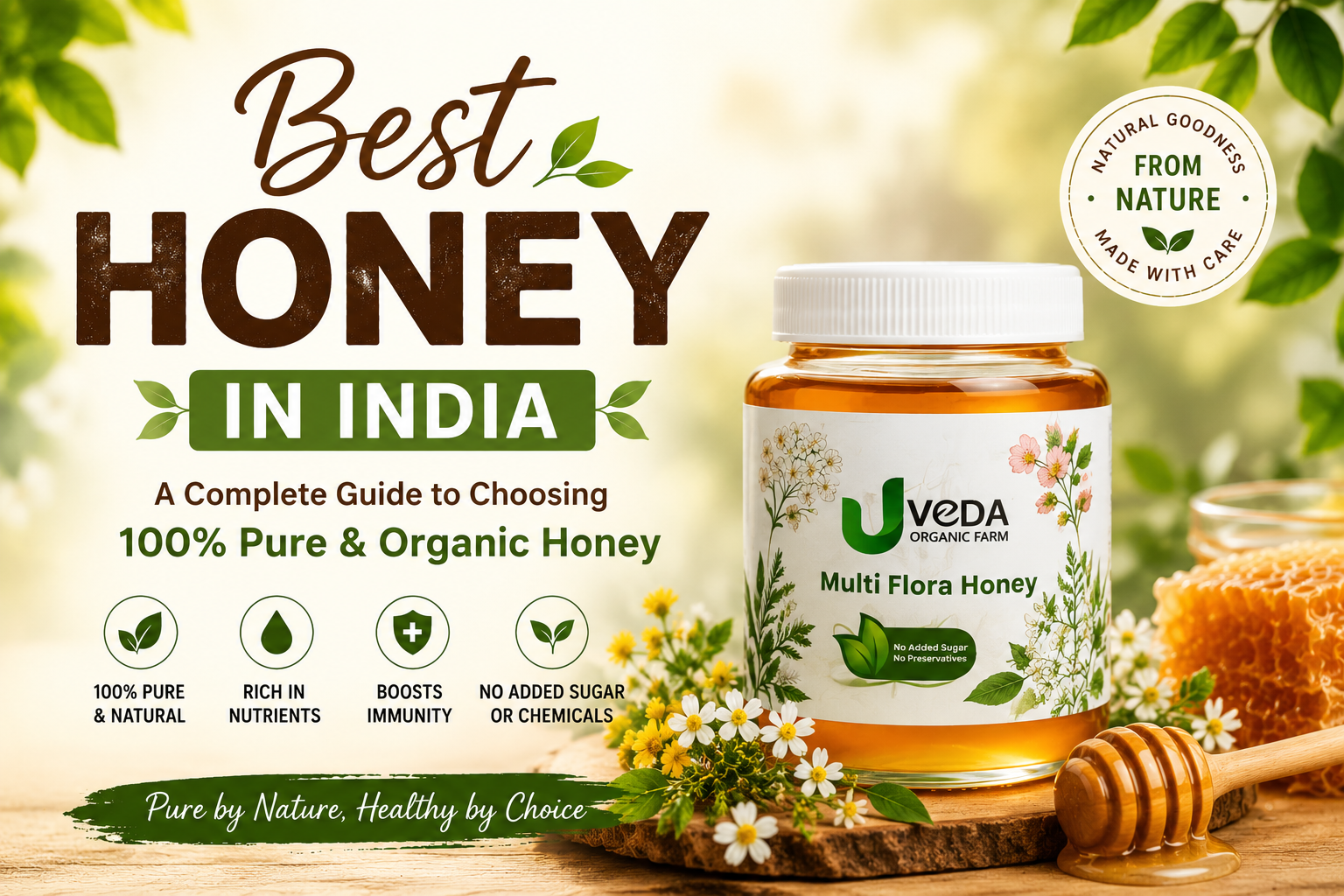
Honey has been valued for centuries as a natural sweetener and a simple addition to everyday meals. But with so many products available today, finding the best honey in India can sometimes be confusing. Different floral sources, processing methods, textures, colours and flavours can make each honey different.
If you are searching for the best organic honey in India, it is important to look beyond packaging and price. Understanding the source, ingredients, processing and quality information can help you make a better choice.
This guide explains what makes pure organic honey different, how to choose raw honey and natural honey, how to identify quality honey, and the different types of honey available in India.
Why Choosing the Best Honey in India Matters
Not all honey tastes or looks the same. Its characteristics can vary depending on the flowers visited by bees, geographical location, harvesting practices and processing.
When choosing honey for regular use, look for a product that is:
- 100% honey
- Free from unnecessary added ingredients
- Responsibly sourced
- Properly packed and labelled
- Minimally processed where applicable
- Purchased from a transparent and trusted seller
Quality matters because honey is naturally a complex food containing mainly sugars along with other naturally occurring substances such as organic acids and enzymes. FSSAI standards also recognize that honey can naturally vary in colour and consistency, including being partly or completely crystallized.
What Makes Pure Organic Honey Different?
Pure organic honey should have a natural honey character without unnecessary artificial ingredients. However, the word “organic” should not be treated as a substitute for checking the product’s certification and labelling.
When buying honey, check the ingredient list and product information rather than judging purity only by appearance.
Good-quality honey may have:
- A natural floral aroma
- A characteristic honey flavour
- Different shades ranging from light to dark
- A fluid, thick or crystallized texture
- Natural variation depending on its floral source
The colour and consistency of honey can naturally differ. Therefore, darker honey is not automatically better, and thick honey is not automatically purer.
Raw Honey vs Processed Honey
Raw honey is commonly used to describe honey that has undergone limited processing and retains more of its natural characteristics.
Processing can vary from one producer to another, so consumers should check the product description and label to understand how the honey has been handled.
If you prefer natural honey, look for clear information about its source, harvesting and processing instead of relying only on claims printed on the front of the jar.
Health Benefits of Pure Honey
Honey can be part of a balanced diet when consumed in moderation. It is naturally rich in carbohydrates and can be used as a sweetener in a variety of foods and drinks.
1. A Convenient Source of Energy
The natural sugars in honey provide carbohydrates that the body can use for energy. This makes honey a convenient addition to breakfast, beverages or snacks.
2. Contains Naturally Occurring Antioxidant Compounds
Different types of honey contain naturally occurring compounds, and their composition can vary according to floral and geographical sources.
3. A Natural Sweetener
Honey can be used instead of refined sugar in many everyday foods and beverages. It still contains sugar, however, so portion size matters.
4. Popular for Soothing the Throat
Honey is traditionally used in warm water and herbal drinks when people want a soothing beverage, particularly during seasonal throat discomfort.
5. Adds Natural Flavour to Food
Beyond nutrition, honey can add floral, fruity, herbal or earthy notes to tea, toast, oats, yoghurt, desserts and other foods.
How to Identify Pure Honey
If you are wondering how to identify pure honey, don’t depend on a single home test such as the water test, thumb test or flame test. These methods are not reliable ways to establish honey purity.
Instead, consider these practical checks:
Check the Ingredient List
Look at the ingredient panel before buying. Honey sold as honey should meet applicable food standards. FSSAI’s honey standards state that honey sold as such should not have food ingredients or additives added to it.
Check the Source
A transparent brand should provide useful information about the honey’s source, floral variety or harvesting region where applicable.
Check the Label and Manufacturer Details
Look for relevant product information, manufacturer/packer details, quantity, batch information and applicable regulatory information.
Don’t Judge Honey Only by Colour
Honey can naturally range from nearly colourless to dark brown. Colour alone cannot prove whether honey is pure or superior.
Don’t Assume Crystallization Means Fake Honey
Natural honey can become partly or completely crystallized. Crystallization is therefore not, by itself, proof that honey is fake or spoiled.
For laboratory-level purity verification, appropriate food-testing methods are more meaningful than viral home tests. FSSAI also publishes methods of analysis for honey and other beehive products.
Types of Organic Honey Available in India
India has a wide variety of honey because bees collect nectar from different plants and flowers. These differences create distinctive flavours, aromas and colours.
Some popular types of organic honey include:
Multiflora Honey
Multiflora honey is collected from nectar originating from multiple flowers. This gives it a varied floral character and makes it a popular choice for everyday use.
Uveda Organic Farm‘s Multiflora Honey is described as raw honey collected from a variety of wildflowers, with a natural floral aroma and rich taste.
Best suited for:
- Daily consumption
- Breakfast
- Tea and beverages
- Oats and yoghurt
- Homemade desserts
Wild Forest Honey
Wild forest honey comes from areas where bees collect nectar from naturally growing plants and wildflowers. It can have a stronger flavour and deeper colour depending on the source.
Uveda Organic Farm describes its Wild Forest Honey as being collected from forests and having a rich amber colour, bold flavour and distinctive aroma.
It can be a good option for people who enjoy a more pronounced, earthy honey flavour.
Ajwain Honey
Ajwain honey has a distinctive aroma and flavour associated with ajwain. It is a more unusual choice compared with conventional floral honey and may appeal to people who prefer a warm, slightly spicy taste.
Uveda Organic Farm’s Ajwain Honey is described as a raw honey product combined with ajwain and having a warm, slightly spicy aroma.
Kashmiri Acacia Honey
Kashmiri Acacia Honey is known for its light colour and delicate floral character. It is a suitable choice for people who prefer mild and smooth-tasting honey.
Uveda Organic Farm describes its Kashmiri Acacia Honey as light, golden and naturally sweet, with nectar sourced from blooming acacia flowers in Kashmir.
It can be enjoyed with:
- Tea
- Breakfast
- Yoghurt
- Toast
- Desserts
Jamun Honey
Jamun honey is associated with nectar from jamun-growing regions and is appreciated for its distinctive taste and darker colour.
It can be a good choice for consumers who want something different from mild floral honey.
Litchi Honey
Litchi honey is known for its pleasant, fruity and floral character. It is often preferred by people who enjoy a lighter and sweeter flavour profile.
Why Organic Honey Is Becoming More Popular
Many consumers are increasingly interested in organic honey in India because they want greater transparency about how their food is produced.
However, when choosing an organic product, don’t rely only on the word “organic” printed on a product page. Check the applicable certification, labelling and sourcing information.
A good honey brand should be transparent about:
- Product source
- Floral variety
- Processing
- Packaging
- Manufacturer or packer details
- Quality and certification information where applicable
FSSAI maintains separate regulations covering organic foods in addition to food-product standards.
Common Myths About Honey
Myth 1: Thick Honey Is Always Pure
Not necessarily. Honey’s consistency can naturally vary from fluid to viscous or crystallized.
Myth 2: Crystallized Honey Is Fake
False. Natural honey can crystallize over time. Crystallization is a natural physical change and does not automatically indicate adulteration.
Myth 3: Dark Honey Is Better Than Light Honey
Not necessarily. Honey colour varies according to its floral source and other natural factors.
Myth 4: Home Tests Can Prove Honey Purity
Popular online tests such as the water, flame or thumb test cannot reliably establish whether honey meets food-quality standards. Proper laboratory analysis is a more dependable approach.
How to Store Natural Honey Properly
Once you buy natural honey, proper storage helps maintain its quality.
Follow these simple tips:
- Store honey at room temperature.
- Keep the jar tightly closed.
- Protect it from moisture.
- Use a clean and dry spoon.
- Keep the jar away from excessive heat and direct sunlight.
There is generally no need to refrigerate honey for normal household storage.
If honey crystallizes, this does not mean it has gone bad. The texture can change naturally over time.
How to Use Honey Every Day
Honey is easy to include in everyday meals.
You can:
- Mix it with warm water.
- Add it to tea or herbal beverages.
- Drizzle it over oats.
- Spread it on toast.
- Add it to yoghurt.
- Blend it into smoothies.
- Use it in homemade desserts.
- Add it to salad dressings.
Remember that honey is still a source of sugar, so moderation is important.
How to Choose the Best Organic Honey Brand in India
When searching for the best organic honey in India, don’t select a brand only because it has attractive packaging or a low price.
Ask these questions before buying:
- Is the product clearly labelled?
- Is the ingredient information transparent?
- Is the source mentioned?
- Is the floral variety clearly described?
- Does the brand provide manufacturer or packer information?
- Are organic claims supported by applicable certification?
- Does the brand explain its harvesting and processing practices?
A trustworthy honey brand should make it easy for customers to understand what they are buying.
Why Many Families Choose Uveda Organic Farm Honey
Uveda Organic Farm focuses on offering a range of honey varieties with different floral and regional characteristics.
Its range includes Multiflora Honey, Wild Forest Honey, Ajwain Honey, Jamun Honey, Litchi Honey and Kashmiri Acacia Honey. The brand describes its honey as raw, natural and carefully harvested, with a focus on traditional and hygienic handling.
For everyday use, Multiflora Honey offers a balanced floral profile. Wild Forest Honey is suited to people who enjoy a stronger, richer flavour, while Kashmiri Acacia Honey offers a lighter and more delicate taste. Ajwain Honey provides a distinctive option for those who prefer a warm, aromatic flavour.
The key is to choose the variety that matches your taste and to check the product information before purchasing.
Frequently Asked Questions
Which is the best honey in India?
The best honey for you depends on your preferences, but look for properly labelled honey from a transparent and trustworthy source. Check the ingredients, source, processing information and applicable quality standards.
What is the best organic honey in India?
There is no single honey that is best for everyone. Multiflora, Wild Forest, Ajwain and Kashmiri Acacia are different varieties with different taste profiles, so the right choice depends on your preference.
Is pure organic honey better than regular honey?
Organic and conventional honey should be evaluated based on their applicable standards, sourcing and certification. If you specifically want organic honey, check for appropriate certification and labelling rather than relying only on marketing claims.
How can I identify pure honey?
Start by checking the ingredient list, product label, source and manufacturer information. Do not rely on a single home test to determine purity.
Is raw honey the same as organic honey?
No. “Raw” and “organic” describe different aspects of a product. Raw generally refers to processing, while organic relates to production standards and certification requirements.
Why does honey crystallize?
Honey can naturally crystallize because of its sugar composition. The process is normal and does not automatically mean the honey is fake.
Which honey is best for daily use?
Multiflora honey is a popular everyday option because its flavour comes from multiple floral sources and can pair easily with breakfast foods and beverages.
What is wild forest honey?
Wild forest honey is honey collected by bees from naturally occurring plants and flowers in forest or wild areas. Its flavour and colour can vary depending on the local floral sources.
Final Thoughts
Choosing the best honey in India is about more than selecting the most popular jar on the shelf. Whether you are looking for pure organic honey, raw honey or natural honey, pay attention to the ingredients, source, labelling and processing information.
If you are searching for different types of organic honey, options such as wild forest honey, multiflora honey, ajwain honey and Kashmiri acacia honey offer different flavours and characteristics.
Take time to read the label, understand what you are buying and choose a brand that values transparency and responsible sourcing.
For consumers looking for a range of natural honey varieties, Uveda Organic Farm offers options including Multiflora, Wild Forest, Ajwain and Kashmiri Acacia honey, giving you the opportunity to choose a flavour that fits your everyday routine.